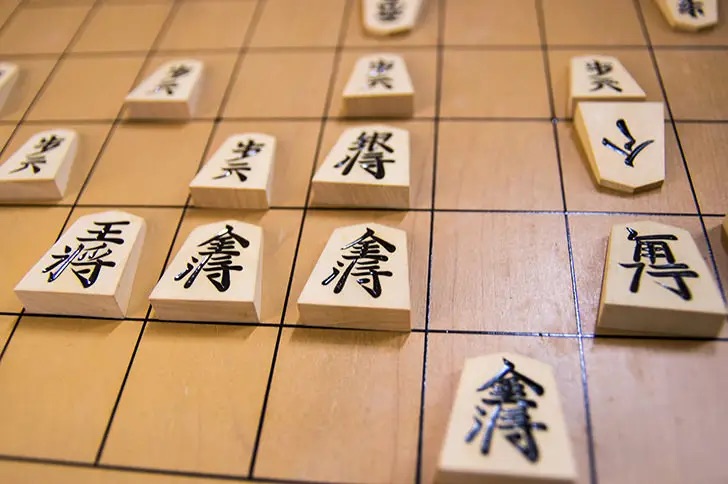
【Shogi Basics 07】Static Rook vs Ranging Rook Explained for Beginners
After learning the basic Shogi rules (05.) and the fundamentals of Castles (06.), the next crucial step is to learn about “Openings (Senpō)”.
Openings are the strategic patterns used in the early stages of a game to secure your King and prepare your attack.
Shogi openings are primarily divided into two major styles: “Static Rook (Ibisha)” and “Ranging Rook (Furibisha)”. Understanding the core difference between them is key to improving your game.
Static Rook (居飛車)
Static Rook (Ibisha) is a strategy where the Rook remains on its original file (typically the 2nd or 8th file). This style emphasizes attacking the center and the opponent’s right side. The King is usually defended on the left side, creating a clear division between offense and defense.
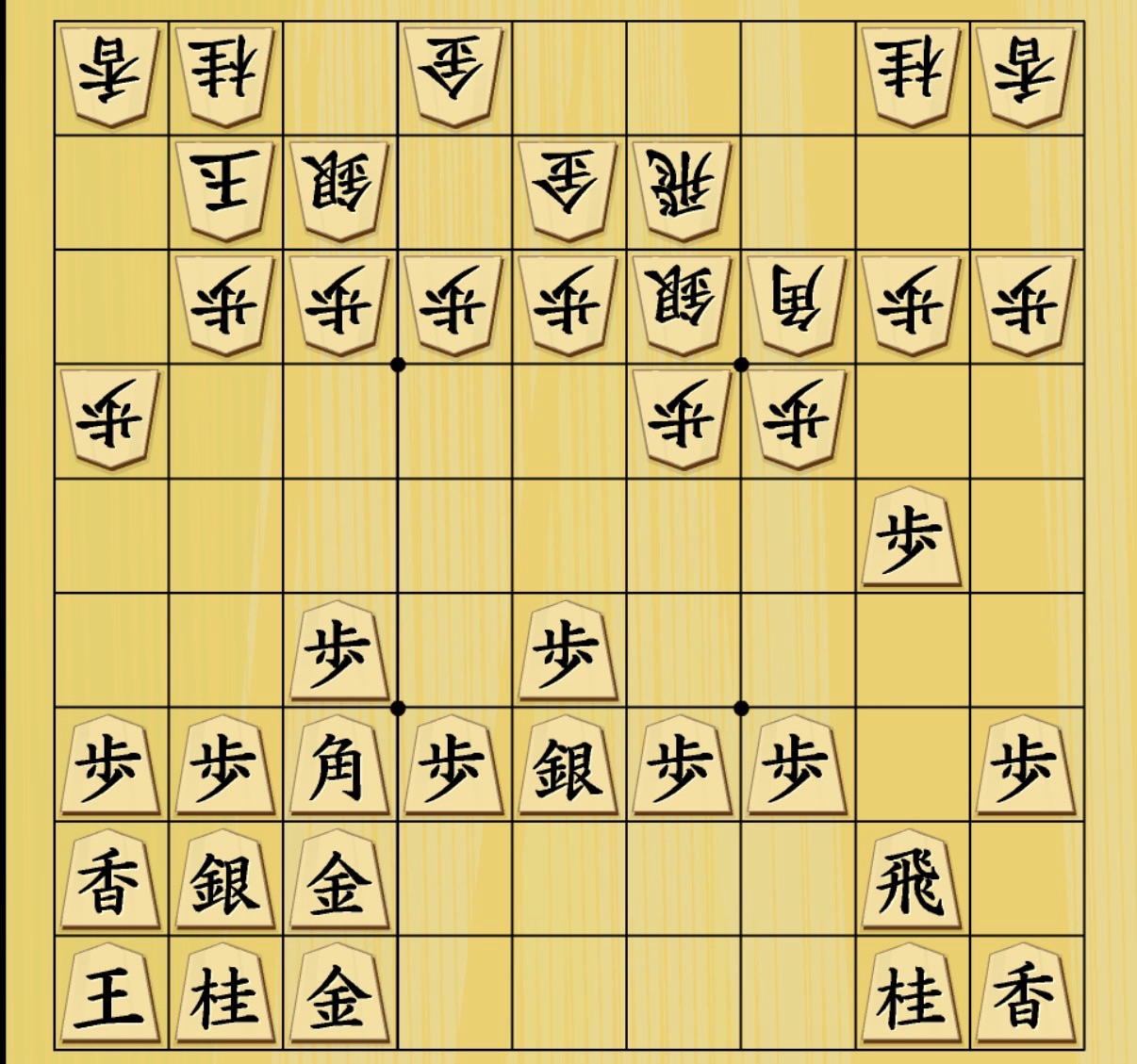
Characteristics of Static Rook (居飛車)
- The Rook remains on its original file.
- Focuses on solid defense (often on the left side) and strong castles.
- Aims to attack the center and the opponent’s right side of the board.
- Often leads to direct, aggressive, and powerful frontal attacks.
Popular Static Rook Castles
- Yagura Castle (矢倉) – Solid defense, often used in complex games.
- Boat Castle (船囲い) – Quick to build, highly aggressive posture.
- Anaguma / Bear-in-the-Hole (穴熊) – Extremely hard to break defense.
Static Rook is suitable for players who prefer solid structures, clear strategic plans, and direct, powerful attacks.
Ranging Rook (振り飛車)
Ranging Rook (Furibisha) is a strategy where the Rook is moved to another file, such as the 4th, 3rd, or center file. The Rook is positioned on the right side to establish a solid defense there, and the King is castled in the space vacated by the Rook (on the left side). This style emphasizes flexibility and counterattacking potential.
Characteristics of Ranging Rook (振り飛車)
- The Rook moves away from its original position (to the 4th, 3rd, or central file).
- Flexible defense, especially on the right side.
- Aims for counterattacks on the opponent’s weak spots (often the left side).
- Features a clearer, more standard initial development strategy.
Popular Ranging Rook Castles
- Mino Castle (美濃囲い) – Well-balanced and the fundamental Ranging Rook castle.
- Silver Crown (銀冠) – A stronger, more developed version of the Mino Castle.
- Ranging Rook Anaguma (振り飛車穴熊) – Achieving an extremely solid defense in the Ranging Rook style.
Ranging Rook is ideal for players who enjoy flexible positions, counter-punching, and clear initial setup strategies.
Static Rook vs Ranging Rook: Comparison Table
| Point | Static Rook (居飛車) | Ranging Rook (振り飛車) |
|---|---|---|
| Rook Position | Stays on original file | Moves to another file |
| Main Attack Area | Center / Opponent’s Right Side | Opponent’s Left Side / Counterattack |
| Play Style | Direct and aggressive | Flexible and reactive |
| Initial Setup Difficulty | Medium | Easy |
| Recommended For | Players who like structure and aggression | Players who like defense and counter-punching |
Which Should Beginners Choose?
For beginners, both styles are excellent choices. However, Static Rook (Ibisha) is often the first strategy recommended, especially if you want to learn the fundamentals of Shogi structure and calculation.
Static Rook involves clear, structured movements and often leads to direct, powerful attacks on the opponent. This aggressive, frontal approach is excellent for beginners who want to master core Shogi concepts and calculation skills early on.
Furthermore, in the professional Shogi world, Static Rook tends to have a slightly higher overall winning percentage than Ranging Rook. This structural advantage can also be a motivating factor for learning Static Rook.
Many professional players master both styles, so feel free to experiment and find what fits your playing style best. Start by focusing on just one style to gain confidence.
Conclusion
Understanding the difference between Static Rook and Ranging Rook is a crucial step in improving at Shogi. We hope this guide helps you choose a style to focus on as you continue your Shogi journey!
 51Shogi – Learn Shogi (Japanese Chess) Step by Step
コメントを残す