Shogi vs Chess: What Makes Them Different?
Shogi and chess look similar at first glance — both are strategic board games focused on capturing the opponent’s king.
But once you start playing, you’ll notice they are surprisingly different.
If you’re a chess player curious about shogi, or a beginner wondering how the two compare, this guide covers the key differences in a simple and clear way.
1. Piece Drops (Captured Pieces Return to the Board)
The biggest difference is the drop rule.
In shogi, captured pieces become your pieces. You can hold them in hand and drop them onto almost any empty square on your turn. In chess, captured pieces are removed from the game permanently.
This rule makes shogi extremely dynamic — even when you’re losing, a single drop can turn the game around.
2. Promotion Rules
Both games have promotions, but they work very differently.
Shogi
Many pieces can promote when entering the opponent’s territory (the last 3 ranks). Promoted pieces often gain stronger or more flexible movement.
Chess
Only the pawn can promote. It usually promotes to a queen, the strongest piece.
3. Board Size and Setup
Shogi is played on a 9×9 board with 20 pieces per side. Chess is played on an 8×8 board with 16 pieces per side.
The larger number of pieces in shogi — combined with drops — keeps the board active far into the endgame.
4. Piece Movement and Variety
The two games use completely different pieces.
Shogi has pieces such as:
Lance Silver General Gold General Knight (moves differently from the chess knight) Rook Bishop Pawn
Chess has:
King Queen Rook Bishop Knight Pawn
Because of these differences, strategies and tactics feel very different in the two games.
5. Game Flow and Strategy
Chess
Pieces disappear as the game progresses. This creates a clear flow: Opening → Middle Game → Endgame Fewer pieces mean simpler, more predictable endgames.
Shogi
Pieces return to the board through drops. The number of pieces stays high, even in the late game. This leads to: longer battles more unexpected tactics frequent turnarounds complex and creative strategies
6. Checkmate and Draws
Chess often ends in draws, including stalemates where a player has no legal move. Shogi almost never ends in a draw. There is no stalemate — if you cannot move and your king is attacked, it’s simply checkmate.
This makes shogi more decisive and fast-paced in terms of results.
7. Visual Style and Culture
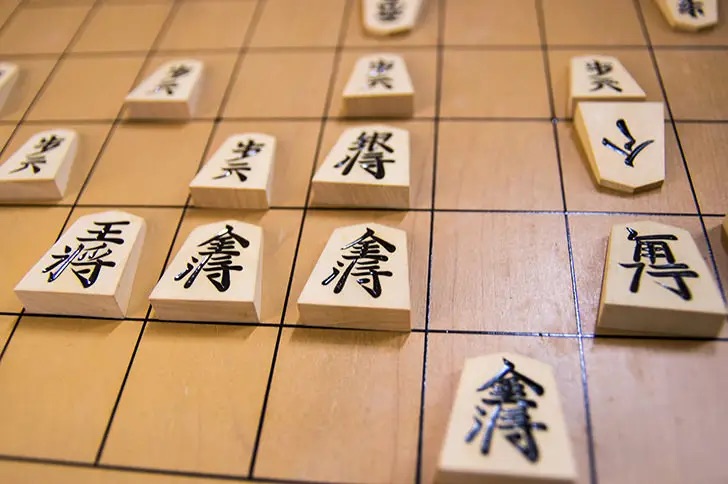
Shogi pieces use Japanese kanji and have a flat, pointed shape. Chess pieces use distinct 3D shapes and come in black and white.
Both games reflect the culture where they developed, making each unique in its atmosphere and style.
Conclusion
Shogi and chess share the same spirit as strategy games, but the gameplay experience is very different.
Chess is structured, theoretical, and often decided by precise calculation. Shogi is dynamic, creative, and full of surprising turnarounds thanks to the drop rule.
If you enjoy strategy games, playing both will deepen your understanding — and give you two amazing worlds to explore.
【将棋Shogi】03.Shogi Pieces Explained: How Each Piece Moves (Complete Guide)

 51Shogi – Learn Shogi (Japanese Chess) Step by Step
コメントを残す